School Coloring Page: An Embroidery Design Review
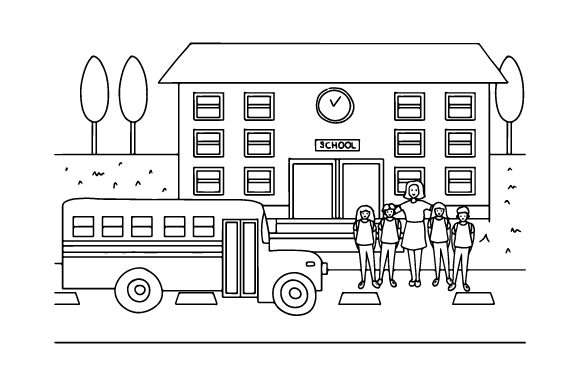
When evaluating a new digital asset for my studio, I look beyond the screen preview to imagine how the lines will actually translate into thread. The School Coloring Page design immediately caught my attention as a versatile candidate for back-to-season merchandise and personalized kids' crafts. As an experienced designer, I know that a coloring page aesthetic offers unique opportunities and specific challenges in machine embroidery. This review breaks down how this design performs when moved from a digital file to a tangible, stitched product, specifically focusing on its viability for small business owners and makers.
First Impressions and Visual Personality
The initial appeal of the School Coloring Page lies in its nostalgic, interactive charm. Unlike complex, photorealistic embroidery files, this design relies on clean outlines and open spaces that mimic a child’s drawing book. Visually, it evokes creativity and education, making it inherently suitable for the Kids category without feeling overly juvenile. For an embroidery project, this "coloring book" style suggests a bold, graphic look rather than dense texture. It feels approachable and playful, which is exactly the mood required for custom apparel or nursery decor. However, as a professional, I immediately assess whether those crisp digital lines will remain crisp under the needle. The success of this design depends entirely on the precision of the running stitch and the stability of the outline.
Real-World Application: The Custom Tote Bag Test
To truly evaluate this design, I mentally placed it onto a canvas tote bag intended for a teacher appreciation gift or a student's library carrier. In this real-life scenario, the School Coloring Page serves a dual purpose: it is both a decorative element and an interactive activity. When stitching this on unlined canvas, the primary concern is fabric texture. Canvas has a weave that can swallow fine details. If the design relies solely on thin running stitches to create the coloring page effect, they might get lost in the fabric grain.
For this application, I would recommend treating the School Coloring Page as a hybrid applique design or using a heavier weight thread for the outlines. If you are creating a sweatshirt embroidery piece instead, the smoother surface of fleece or French terry allows for finer detail retention. I recently worked on a similar concept where we used the embroidery to define the borders, leaving the center open for fabric markers. This approach elevates the handmade product value because it invites user participation. For Etsy sellers, marketing this as an "embroidered coloring kit" rather than just a decorated bag creates a unique selling proposition that distinguishes your shop from generic print-on-demand competitors.
Where Caution is Required
While the School Coloring Page is adaptable, it is not universally forgiving. Makers must be strategic about placement and substrate selection:
- Stretchy Fabrics: On ribbed knits or spandex blends, the rigid lines of a coloring page design can distort. Without adequate stabilizer, the registration between outline elements may shift, ruining the "clean line" aesthetic essential to this style.
- Small Hoop Sizes: Reducing this design too much is risky. Coloring page motifs often contain interior details meant for crayons, not needles. If scaled down for a baby onesie or cap, verify that negative spaces remain open. Dense satin stitch areas at small scales can become bulletproof and uncomfortable against skin.
- Dark Fabrics: This design style typically assumes a light background to simulate paper. Stitching white or yellow outlines on navy or black fabric requires high contrast thread colors and potentially a white underlay to prevent the fabric color from muddying the design intent.
- Curved Surfaces: Caps and sleeves present geometric challenges. A flat, 2D coloring page layout may need digitizing adjustments to wrap correctly around a curved brim without looking skewed.
Impact on Product Value and Brand Perception
Using the School Coloring Page effectively signals professionalism and attention to detail. In the competitive landscape of commercial embroidery and craft business assets, clarity equals trust. A finished product where the stitching aligns perfectly with the intended coloring zones demonstrates mastery of stitch density and tension. Conversely, a messy execution makes the item look like a factory reject.
For digital product sellers offering this as a printable mockup or digital embroidery file, presentation matters. Customers need to see how the design interacts with different materials. Showing the School Coloring Page stitched on both a smooth pillow cover and a textured tea towel helps buyers understand its versatility. This transparency reduces returns and increases buyer engagement because the customer can visualize the end result. Furthermore, because this design bridges the gap between decoration and activity, it enhances giftability. Parents and teachers perceive higher value in items that encourage creativity, making this a strong contender for holiday embroidery or back-to-school sales events.
Practical Designer Notes for Success
Before loading this embroidery file into your machine for a client order or inventory batch, adhere to these professional best practices:
- Verify File Formats: This product includes SVG, Transparent PNG, EPS, and DXF formats. While excellent for cutting machines and printing, confirm you have the correct machine embroidery format (like PES, DST, or JEF) compatible with your specific equipment before purchasing or downloading.
- Test Stitch Density: Always run a test sew-out on scrap fabric identical to your final project. Check if the running stitch is substantial enough to serve as a guide for coloring without breaking easily during use or washing.
- Stabilizer Selection: For woven fabrics like denim or canvas, a tear-away stabilizer usually suffices. For knits or stretchy baby clothes, use a cut-away stabilizer to maintain the structural integrity of the School Coloring Page over time.
- Thread Color Contrast: Test your thread palette against the fabric in natural lighting. Digital screens are deceptive; ensure the outline stands out distinctly so the "coloring" aspect remains functional.
- Licensing Confirmation: Before selling finished products or incorporating this into commercial embroidery projects, review the license terms. Ensure you are permitted to sell physical items made with this design and clarify any restrictions on digital redistribution.
- Mockup Accuracy: If using the included Transparent PNG for Etsy listings, overlay it realistically. Do not misrepresent the size or complexity. Honest mockups build long-term brand consistency and customer loyalty.
Evaluating Versatility Across Categories
The true strength of the School Coloring Page is its cross-category potential. Beyond standard kids' apparel, consider its utility in niche markets. For boutique branding, this motif could be adapted for packaging tags or thank-you cards, reinforcing a playful brand identity. In the realm of personalized gifts, adding a child’s name in a complementary font transforms a generic design into a cherished keepsake. For makers focused on sustainable crafts, this design works beautifully on upcycled denim jackets or repurposed linens, where the hand-drawn aesthetic complements the imperfect nature of the base material.
However, always respect the design's inherent limitations. It is a graphic, linear style. Trying to force shading or gradient fills into a coloring page template often defeats the purpose. Embrace the simplicity. Let the negative space do the work. Whether you are producing embroidered patches for school clubs or designing a new line of interactive nursery decor, let the medium dictate the modification. The provided SVG and DXF files offer flexibility for those who wish to adjust line weights or resize elements before digitizing, allowing for customization that standard embroidery files might not permit.
Ultimately, the School Coloring Page is more than just a cute graphic; it is a functional design asset that invites interaction. By approaching it with technical diligence and creative foresight, makers can transform simple vector lines into profitable, engaging, and professionally executed embroidery projects that resonate with both children and the adults buying for them.