Sorry My Schedule is Totally Booked: Design Review
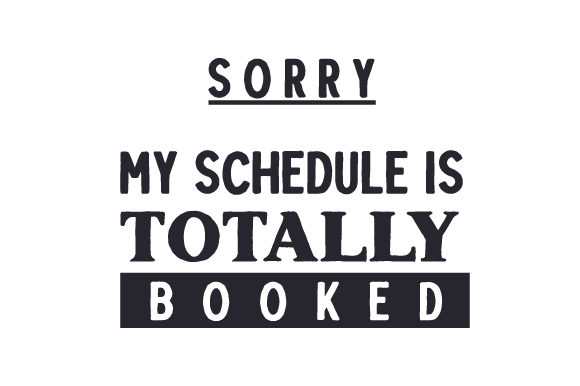
As a professional embroidery digitizer and product reviewer, I approach every new machine embroidery design with a critical eye. It is not enough for a graphic to look appealing on a screen; it must translate flawlessly through needle and thread. When evaluating "Sorry My Schedule is Totally Booked," my primary focus is on how this phrase transitions from a digital asset to a tangible, stitch-out reality. This design carries a specific mood—witty, relatable, and slightly sassy—that resonates deeply with busy parents, teachers, and entrepreneurs. However, capturing that personality in thread requires careful consideration of layout, density, and application.
First Impressions and Visual Personality
Upon opening the files, the immediate impression of "Sorry My Schedule is Totally Booked" is one of bold clarity. The typography appears designed to be legible at various sizes, which is crucial for commercial viability. In the world of Crafts and apparel decoration, text-heavy designs live or die by their font choice. This design avoids overly ornate scripts that often turn into thread nests on fabric. Instead, it leans into a cleaner aesthetic that suggests confidence. For an Etsy seller or boutique owner, this visual directness is a selling point. Customers browsing thumbnails need to read the sentiment instantly. The layout feels balanced, making it suitable for center-chest placement on sweatshirts or as a prominent statement on a tote bag.
Real-World Application: The Teacher Tote Test
To truly evaluate this design, I mentally placed it in a real-life scenario common to the School Amp category. Imagine creating a custom canvas tote bag for a teacher during back-to-school season. Teachers are the ultimate demographic for this sentiment, but they also demand durability. A tote bag design faces significant wear and tear, so stitch integrity is paramount.
In this context, "Sorry My Schedule is Totally Booked" performs well because the lettering likely utilizes a combination of satin stitch outlines and fill stitches. This structure provides necessary coverage on canvas without becoming bulletproof stiff. If I were producing this for a client, I would pair the design with high-quality cutaway stabilizer to prevent the canvas from puckering under the weight of the text. The humor of the phrase adds immense value to the handmade product, transforming a generic bag into a personalized gift that acknowledges the recipient's hard work. This emotional connection is what drives sales and repeat business for creative entrepreneurs.
Performance Across Different Substrates
Versatility is key for any digital embroidery file. While this design shines on stable fabrics like canvas or denim, its performance varies elsewhere. For sweatshirt embroidery, specifically on fleece or French terry, the design holds up beautifully. The pile of the fabric can sometimes swallow thin running stitches, but assuming this file has adequate underlay, the text should pop against the textured surface. This makes it an excellent candidate for fall and winter custom apparel lines.
However, caution is required when applying this to stretchy knits or lightweight baby items. If you are considering this for baby embroidery on a onesie, you must verify the stitch density. Heavy text on thin jersey knit can cause distortion or tearing. In such cases, using a fusible mesh stabilizer and potentially reducing the design size is mandatory. For caps and curved surfaces, the horizontal span of "Sorry My Schedule is Totally Booked" might present challenges. Always test the arc distortion before committing to a production run of hats. The design’s natural strength lies in flat embroidery projects where the message can remain linear and crisp.
Navigating Technical Constraints and Fabric Choices
Every experienced maker knows that file formats matter. Receiving this design in SVG, Transparent PNG, EPS, and DXF offers flexibility, but these are primarily vector and raster formats. For actual machine stitching, you must ensure you have the appropriate embroidery-specific conversion or source file compatible with your machine. Never assume a DXF will stitch without digitizing software intervention.
Fabric texture plays a massive role in the final outcome. On dark fabrics, contrast is everything. I recommend testing thread colors against your specific garment color before finalizing. White thread on navy blue is classic, but metallic or variegated threads could add a premium feel for a small shop product. Conversely, on highly textured fabrics like terry cloth or minky, consider adding a water-soluble topping to keep the stitches from sinking in. This ensures the witty message remains readable rather than getting lost in the nap of the fabric.
Commercial Viability and Brand Consistency
For those running a craft business, consistency builds trust. "Sorry My Schedule is Totally Booked" fits seamlessly into niches focusing on teacher appreciation, mom life, or small business humor. When listing this as a finished product, use the provided Transparent PNG to create accurate printable mockups. Accurate representation reduces returns and increases buyer engagement. Customers want to see exactly how the embroidery sits on the garment.
If you are selling the embroidered patch version of this design, pay close attention to the border finish. A merrowed edge or tight satin border elevates the perceived value. For digital product sellers offering this as part of a bundle, ensure your licensing terms are clear. Clarify whether buyers can use the design for physical products only or if digital redistribution is permitted. Protecting your design assets is as important as creating them.
Essential Designer Notes for Success
Before you hoop your first piece of good fabric, adhere to these practical guidelines to ensure "Sorry My Schedule is Totally Booked" meets professional standards:
- Always Test Stitch: Never skip the test run on scrap fabric similar to your final project. Check for registration issues between letters and overall stability.
- Verify Hoop Size: Confirm the design dimensions fit comfortably within your hoop with adequate clearance. Crowding the hoop edges leads to tension problems.
- Check Stabilizer Pairing: Match your stabilizer to the fabric weight. Cutaway for knits and permanent items; tear-away for stable wovens; wash-away for delicate sheers.
- Inspect Small Details: Zoom in on the embroidery file to check for tiny jumps or excessive trims. Clean up any unnecessary stops to improve production efficiency.
- Contrast Testing: View the design in black and white to ensure tonal contrast exists independent of color. This guarantees readability on all backgrounds.
- Licensing Confirmation: Double-check usage rights before listing any commercial embroidery items. Respect intellectual property to maintain a reputable shop.
- Mockup Accuracy: Use the transparent PNG to overlay on realistic garment photos. Avoid misleading customers with flat digital renders that don't show stitch texture.
Final Thoughts on Project Selection
"Sorry My Schedule is Totally Booked" is more than just a clever phrase; it is a versatile asset for the modern maker. Its success depends entirely on respectful execution. By understanding the interplay between stitch density, fabric choice, and end-use functionality, you transform a simple file into a high-value personalized gift or best-selling inventory item. Whether you are crafting for a school fundraiser, stocking an Etsy shop, or making a gift for an overwhelmed friend, treat this design with technical precision. The result will be a polished, professional finished product that honors both the humor of the message and the quality of your craftsmanship. Remember, in embroidery, the difference between amateur and artisan is always found in the preparation and testing phases. Take the time to get it right, and this design will serve your portfolio exceptionally well.