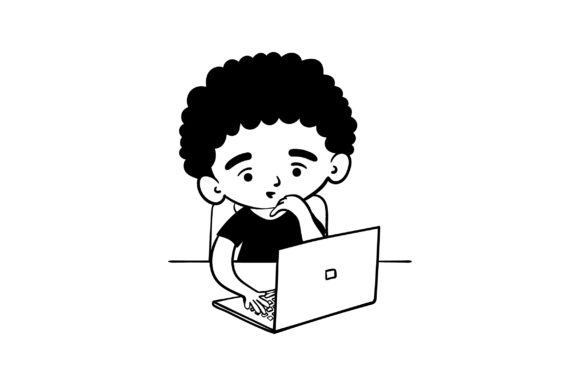
Student on Laptop: An Embroidery Design Review
As a professional embroidery designer and product reviewer, I approach every new digital asset with a specific question: will this actually stitch out well on real fabric? When evaluating the Student on Laptop design, my first impression is one of clean, relatable utility. This isn't just a generic clip-art graphic; it captures a focused, academic mood that resonates immediately with students, tutors, and remote workers. The silhouette suggests a balance between modern technology and studious dedication, making it a versatile candidate for the School Amp category within Crafts. However, visual appeal on a screen does not always translate to a successful finished product. My review focuses on how this machine embroidery design performs when thread meets textile.
First Impressions and Visual Personality
The layout of Student on Laptop feels intentionally compact. For an Etsy seller or small shop product creator, this is crucial. Designs that are too sprawling often get lost on smaller items like pockets or cap fronts. This design appears centered and self-contained, which implies it was likely digitized with garment placement in mind. The mood is studious yet accessible, avoiding overly complex shading that can sometimes cause registration issues during stitching. As a digital embroidery file, the inclusion of SVG, Transparent PNG, EPS, and DXF formats suggests versatility. While these are primarily vector and raster formats useful for printable mockups and cutting machines, they serve as excellent references for color matching and sizing before you even load your embroidery file into your machine software.
Real-World Application: The Custom Tote Bag Test
To truly evaluate this design, I mentally placed it in a real-life scenario: creating a custom canvas tote bag for a university bookstore or a personalized gift for a graduate student. Canvas is a textured, unforgiving fabric that demands respect. In this context, Student on Laptop shines as a tote bag design because its subject matter aligns perfectly with the function of the item. A student carrying books needs a bag that reflects their identity.
When stitching this onto canvas, I would treat it as a potential applique design opportunity if the file supports it, or use a dense fill stitch for the laptop body to ensure coverage against the coarse weave. The contrast between the smooth stitches of the laptop and the nubby texture of the canvas creates a high-value tactile experience. For a craft business, this specific application builds customer trust because the design looks intentional rather than slapped on. It transforms a blank bag into a piece of custom apparel or accessory that feels boutique-made. If you are selling these, using the provided Transparent PNG to create accurate design assets for your listing photos will help buyers visualize the final result before purchasing.
Performance Across Apparel and Accessories
Beyond tote bags, this design has significant potential for sweatshirt embroidery. The "student" theme naturally fits collegiate wear or study-lounge aesthetics. On fleece or French terry, the design needs to maintain clarity without sinking into the pile. Here, the visual weight of Student on Laptop matters. If the lines are too thin, they disappear; if they are too thick, the garment becomes stiff. Based on the visual structure, this design seems suitable for left-chest placement on sweatshirts or as a center-back motif on denim jackets.
For those specializing in baby embroidery or nursery decor, caution is advised. While the theme is educational, the sharp angles of a laptop might not suit soft baby blankets unless softened with pastel thread colors or rounded styling. However, for older children’s backpacks or pencil cases, it is spot-on. As an embroidered patch, this design could be highly marketable. Patches require dense borders and sturdy backing; the distinct shape of a student at a desk lends itself well to merrowed edges, making it a viable product for makers who sell iron-on accessories separately from garments.
Critical Considerations for Fabric and Hoop Size
Every experienced maker knows that where you place a design is as important as the design itself. With Student on Laptop, you must be mindful of surface curvature. Caps and hats present unique challenges due to the curved sewing field. Unless this design is specifically digitized for caps (with a bottom-up stitch sequence and wider spacing), I would avoid placing it directly on the front panel of a structured cap. It is better suited for flat surfaces like aprons, pillow covers, or tea towels.
Fabric texture also dictates success. On stretchy knits used for holiday embroidery or casual tees, proper stabilizer usage is non-negotiable. A design featuring straight lines (like a laptop screen) will show distortion instantly if the fabric shifts. Always use a cut-away stabilizer for knits to maintain the geometric integrity of the laptop shape. Conversely, on dark fabrics, ensure the embroidery file includes adequate underlay. Without it, the fabric grain might show through lighter thread colors, diminishing the professional look of your handmade product.
Regarding hoop size, verify the dimensions before purchasing. While the vector files allow infinite scaling visually, the embroidery digitization has fixed limits. Stretching a design beyond 10-15% of its original size can compromise stitch density and lead to gaps or thread breaks. If you plan to resize significantly for different projects, invest time in re-digitizing or adjusting pull compensation.
Designer Notes for Professional Results
To ensure Student on Laptop meets commercial standards, follow these practical steps:
- Test Stitch First: Never run a new design on a client’s garment without testing on scrap fabric of similar weight and texture. Check for registration errors between the student figure and the laptop details.
- Verify Licensing: The product description lists file formats but does not explicitly state commercial licensing terms. Before selling finished items or digital products, confirm whether you have the right to use this for commercial embroidery. Protecting your business starts with respecting intellectual property.
- Contrast Check: View the Transparent PNG in black and white. If the design relies solely on color to distinguish the laptop from the student, it may fail on monochromatic garments. Good digitizing uses stitch direction and texture to define shapes, not just color changes.
- Mockup Accuracy: Use the SVG and PNG files to create realistic printable mockups for your shop. Accurate previews reduce returns and increase buyer engagement by setting correct expectations for the personalized gift or merchandise.
- Thread Selection: For a tech-related theme like this, consider using polyester threads for their sheen and durability, especially on items like custom apparel that will face frequent washing. Matte cotton threads might make the laptop look dated.
Elevating Your Handmade Brand
Ultimately, Student on Laptop is more than just a cute graphic; it is a functional asset for makers targeting the academic and remote-work niche. Its strength lies in its specificity. In a market saturated with generic florals and animals, a well-executed scholastic design stands out. Whether you are creating holiday gifts for teachers, branding merchandise for a tutoring center, or expanding your Etsy catalog, this design offers a solid foundation.
Success comes from treating the digital embroidery file as a starting point, not a guarantee. By paying attention to stitch density, stabilizer choices, and fabric compatibility, you transform a digital download into a premium finished product. Remember that customers buy the quality of the stitch-out, not just the concept. When executed with care, Student on Laptop can become a staple in your collection of reliable, profitable design assets that consistently deliver professional results across various crafts and textiles.