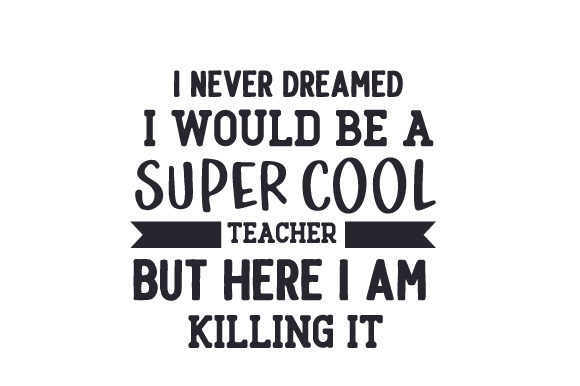
Three Reasons for Being a Teacher: Design Review
As an embroidery digitizer and product reviewer, I approach every new file with a critical eye toward stitchability and marketability. When evaluating Three Reasons for Being a Teacher.., my primary focus is not just the sentimental message, but how that message translates from a digital screen to physical thread. This design falls squarely within the School Amp category, a niche that demands high legibility and emotional resonance. For crafters, Etsy sellers, and apparel decorators, understanding the technical behavior of this machine embroidery design is essential before committing it to fabric or listing it as a finished product.
First Impressions and Visual Hierarchy
The initial appeal of Three Reasons for Being a Teacher.. lies in its narrative structure. Unlike generic school graphics, this design invites the viewer to read and engage. From a design perspective, text-heavy embroidery requires a careful balance between aesthetic beauty and functional clarity. The layout suggests a vertical or stacked arrangement, which is ideal for maximizing hoop space without excessive width. This makes it particularly suitable for centered chest placements on sweatshirts or vertical orientations on tote bags.
Visually, the mood is appreciative and professional yet warm. It avoids the chaotic clutter often found in novelty teacher designs. For a handmade product, this clean visual personality signals quality. When I review digital embroidery file assets like this, I look for intentionality in the spacing. If the lettering is too tight, satin stitches will merge; if too loose, the connection to the theme feels disjointed. This design appears to respect the negative space necessary for embroidery, allowing the fabric texture to breathe between the stitched elements.
Real-World Application: The Teacher Appreciation Tote
To truly evaluate performance, we must move beyond mockups. Consider a real-life scenario: creating a custom canvas tote bag as a personalized gift for an end-of-year teacher appreciation event. Canvas is a forgiving fabric, but it has a distinct weave that can swallow fine details. In this context, Three Reasons for Being a Teacher.. serves as the focal point of the bag.
During the stitching process for such a project, the interaction between thread colors and fabric texture becomes paramount. If the design utilizes fill stitch for background elements and satin stitch for the text, the contrast must be sharp. A tone-on-tone approach might look elegant in a printable mockup but could fail to read clearly on actual canvas under classroom lighting. As a maker, I would recommend testing high-contrast thread combinations—perhaps navy thread on natural canvas or white thread on a colored bag—to ensure the "three reasons" are instantly legible from a distance. This level of visibility directly impacts customer trust and the perceived value of the commercial embroidery piece.
Technical Considerations for Apparel and Gifts
While tote bags are straightforward, applying this design to custom apparel introduces variables that require careful management. Sweatshirt embroidery and baby embroidery present different challenges regarding stabilizer choice and stitch density. Fleece and knit fabrics have stretch and pile that can distort intricate lettering.
- Stabilizer Selection: For stretchy fabrics like t-shirts or sweatshirts, a cut-away stabilizer is non-negotiable to prevent puckering around the text blocks. Tear-away may suffice for woven cottons but risks distorting the design perimeter during removal.
- Stitch Density Check: Before running Three Reasons for Being a Teacher.. on delicate items, verify the stitch density. Overly dense areas on lightweight fabric can cause tearing or create a stiff, bulletproof patch effect that ruins the drape of the garment.
- Hoop Size Verification: Text-based designs often push the limits of standard hoops. Confirm your machine’s maximum field size accommodates the full height of the design without requiring re-hooping, which introduces alignment risks.
For small shop products intended for frequent washing, such as kitchen towels or aprons, durability is key. Ensure the design does not rely solely on running stitch for structural elements, as these can snag or unravel over time. Satin stitch borders or adequate underlay stitching provide the longevity expected in a premium handmade product.
Navigating Fabric Limitations and Detail
Not every substrate is a safe home for this design. Experienced makers know that textured fabrics like terry cloth or minky require a water-soluble topping to prevent stitches from sinking into the pile. Without this step, the finer details of Three Reasons for Being a Teacher.. may become illegible. Similarly, dark fabrics demand careful planning; if the design includes light-colored elements meant to simulate paper or chalk, ensure sufficient underlay is present to prevent the dark fabric color from bleeding through the top threads.
Curved surfaces, such as caps or curved yokes on shirts, pose significant risks for linear text designs. Unless the embroidery file has been specifically digitized with arc compensation for curved sewing fields, straight text will appear distorted when wrapped around a hat. In such cases, it is safer to reserve this specific design for flat embroidery projects or seek a cap-specific variation. Always inspect tiny lettering and decorative accents at 100% zoom in your software before stitching; what looks crisp on a monitor may be physically impossible for a needle to execute cleanly at small scales.
Commercial Viability and Business Strategy
For Etsy sellers and creative entrepreneurs, Three Reasons for Being a Teacher.. offers strong commercial potential due to its evergreen relevance in the education sector. However, success depends on presentation and compliance. When creating listings, use black and white mockups alongside color versions to demonstrate versatility. Show the design on multiple substrates—a mug, a shirt, a notebook cover—to help buyers visualize the finished product in their own lives.
Critically, review the licensing terms associated with the SVG, Transparent PNG, EPS, and DXF files provided. Clarify whether you are permitted to sell physical embroidered items, digital transfers, or both. Misunderstanding usage rights can jeopardize a craft business. Furthermore, because this design touches on the personal motivations of educators, it pairs exceptionally well with customization options. Offering to swap one of the "reasons" for a specific grade level or subject name can transform a standard inventory item into a high-value personalized gift, significantly boosting buyer engagement and average order value.
Essential Pre-Stitch Protocol
Professional results are never accidental. Before using Three Reasons for Being a Teacher.. on a final product, adhere to a strict testing protocol. Always stitch out a sample on scrap fabric that matches your final project’s weight and weave. This test run reveals issues with thread tension, color contrast, and registration that digital previews cannot show. Check whether the design works harmoniously with your chosen thread brand; some brands have higher sheen or thickness that alters the final appearance.
Finally, consider the end user. Teachers appreciate practicality and sentimentality in equal measure. Whether you are producing boutique branding merchandise, holiday gifts, or classroom decor, the execution must honor the message. By treating this embroidery project with technical rigor and thoughtful application, you ensure that the final result is not just a collection of stitches, but a durable, meaningful artifact that celebrates the profession. Verify all specifications, respect the fabric, and let the quality of your craftsmanship amplify the heartfelt sentiment of the design.