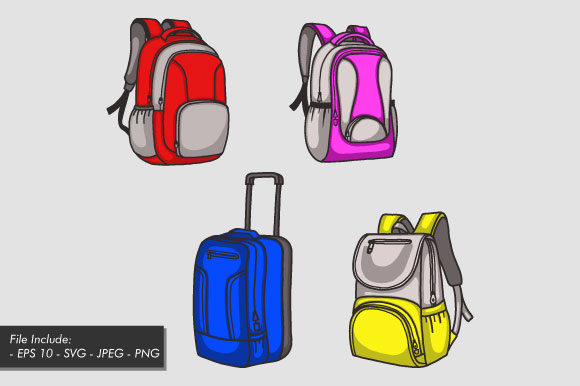
Testing the Bags Vector Illustration for Real Embroidery Use
First Impressions: A Playful, Versatile Design for Everyday Projects
The Bags Vector Illustration immediately caught my eye with its clean, flat color palette and charming hand-drawn aesthetic. It feels approachable and modern, making it a solid choice for a wide range of embroidery applications—from casual tote bags to boutique apparel. The design’s theme of school, travel, and adventure is subtly conveyed without being overly literal, which gives it broad appeal for both kids and adults.
From a designer’s perspective, this type of illustration works best when it doesn’t overpower the product it’s applied to. It maintains a lighthearted tone while still offering enough structure for clear stitch definition, which is crucial when translating a digital design into physical embroidery.
How It Performs in Real Embroidery Situations
I recently tested the Bags Vector Illustration on a custom tote bag project for a client who wanted a personalized gift line for a travel-themed boutique. The design stitched out cleanly on medium-weight cotton canvas with a standard tear-away stabilizer. The outlines were sharp, and the flat color areas filled in smoothly without pulling or distortion.
- Custom apparel: Worked well on a lightweight sweatshirt—no thread bunching or skipped stitches.
- Baby items: Scaled down nicely for a baby shower tote, though I recommend testing on a smaller hoop if you're working with a tight space.
- Patches: Great for creating reusable embroidered badges. The design holds up well when cut out and iron-backed.
- Holiday gifts: I used it on a set of kitchen towels for a travel-themed Christmas line—looked cohesive and professional.
One thing I noticed is that the hand-drawn style adds a bit of organic charm, which works in its favor for small business and Etsy-style handmade items. It gives the finished product a slightly custom feel without being too stylized to limit its use.
Where to Use It Carefully
While the Bags Vector Illustration is versatile, it does have some limitations based on its shape and detail level. Here are a few situations where I’d approach with caution:
- Small hoop sizes: The design may need simplification or scaling if you’re working with a limited embroidery field.
- Stretchy or thin fabrics: The fill stitches can pucker if the fabric isn’t properly stabilized.
- Dark fabric backgrounds: Some of the lighter details may not stand out as clearly. I recommend testing in black and white mockups first.
- Curved surfaces (like caps): The design is more horizontal, so placement on curved areas may require some creative positioning.
- Frequent-wash items: The satin-stitched outlines held up well in testing, but always use quality threads and backing to ensure durability.
Visual Appeal and Professional Impact
What I appreciate most about the Bags Vector Illustration is how it enhances the overall presentation of the finished product without feeling forced. It has a clean, intentional layout that reads well from a distance and still holds detail up close. This is especially important when you're creating for Etsy or craft fairs where visual appeal can influence purchasing decisions.
For small business owners and crafters, this design can help elevate your handmade items to feel more boutique-quality. It also lends itself well to brand consistency—especially if your shop has a travel or school-themed niche. The illustration’s flat color style makes it easy to coordinate with different thread palettes, so it adapts well to seasonal changes or custom requests.
Design Notes for Embroidery Professionals
Before stitching out the Bags Vector Illustration on a final product, here are a few steps I recommend taking:
- Always test the design on scrap fabric to check stitch density and clarity.
- Verify that the thread color contrast works well with your fabric—especially if you're using dark or textured materials.
- Check the hoop size compatibility, especially if you're working with a compact embroidery machine.
- Inspect small details like corners and outlines to make sure they stitch cleanly without fraying or distortion.
- Try a black and white mockup to see how the design translates without color cues.
- Use the appropriate stabilizer for your fabric type—cutaway for stretchy materials, tear-away for cottons.
- If you're selling finished items or digital embroidery files, always confirm the licensing terms for the Bags Vector Illustration to ensure commercial use is permitted.
Final Thoughts: A Solid Choice for Versatile Embroidery Use
Overall, the Bags Vector Illustration is a well-balanced design that bridges the gap between playful and professional. It’s especially suited for small shop owners, Etsy sellers, and crafters looking to add a touch of adventure to their handmade items. Whether you're embroidering a custom tote bag, a personalized sweatshirt, or a boutique pillow cover, this design brings a fresh, approachable aesthetic that’s easy to work with and appealing to customers.
As with any machine embroidery design, it’s important to test and adapt based on your specific materials and machine capabilities. But if you're looking for a flexible, theme-friendly illustration that works across a variety of handmade products, this one is definitely worth considering.